
Before falling asleep at night, I often find myself watching a movie in my mind. For years, this mental movie theater was a comforting place to replay my day or dream about the future. But somewhere along the way, that escape shifted into something darker — instead of joy, I began imagining every worst-case scenario. What once felt safe became filled with catastrophic anxiety.
Through many years of therapy, I’ve learned ways to quiet this destructive inner dialogue — but it’s not easy to always stay mentally strong, especially when life throws curveballs. And while therapy has given me tools, the challenges of real life often stir up the thoughts I’ve worked so hard to quiet.

When Life Feeds Catastrophic Anxiety
Over the last few years, my family has faced more than our fair share of life-changing events. Cancer, unexpected job loss, and most recently, a devastating diagnosis I can’t even verbalize, have all altered the path we thought we were on. Each event felt like a storm I couldn’t control, and my brain did what it always does: imagine the worst possible ending.
When you live with catastrophic anxiety, uncertainty can feel unbearable. My mind tricks me into believing the darkest scenarios are inevitable, blurring the line between reality and imagination. What if the treatment doesn’t work? What if the job never comes? What if we lose the person we love before we’re ready? The unknown terrifies me, and I spiral into believing that if I can predict the worst, maybe I can prepare for it.
But the truth is, I can’t. None of us can.

What Catastrophic Anxiety Feels Like
Catastrophic anxiety is more than just worry — it’s like living inside a “what if” storm. I’ll picture a family trip and instead of seeing sunshine, I see endless rain. I’ll think about a doctor’s appointment and immediately imagine the scariest prognosis. Even little things, like a delay in someone texting back, can send me down a path of panic.
It’s exhausting, because these imagined disasters feel as real in my body as if they were actually happening. My heart races, my stomach drops, my sleep disappears. I can’t eat or I eat to cope with the uneasiness. I retreat inside myself to sit with my emotions – partially wanting someone to sit beside me but also needing to be alone. Therapy has helped me understand that these mental movies are just that — movies — but when I’m trapped inside them, it’s hard to remember I’m the director, not the victim.
Learning to Cope and Quiet the Thoughts
I’m still a work in progress, but therapy has given me a few tools that help when my catastrophic thinking takes over:
- Canceling catastrophic thoughts: When a worst-case scenario pops up, I try to consciously stop and replace it with a more balanced “what if.” (Ways to Quiet Anxiety)
- Speaking instead of bottling: My therapist reminds me that holding everything inside only makes it heavier. Writing, talking, and sharing my truth lifts some of the weight.
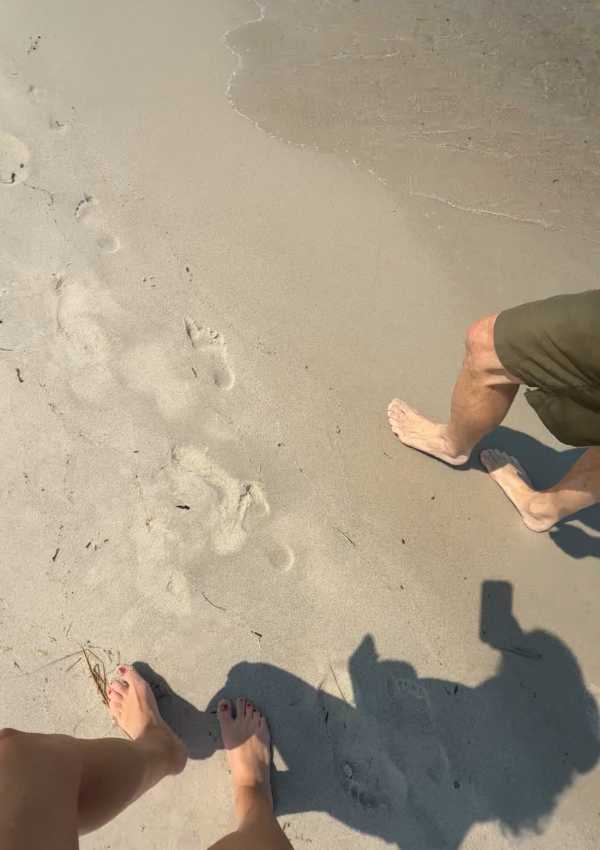
- Distinguishing daydreams vs. disasters: There’s nothing wrong with imagining sitting on a sunny beach with a book and a cocktail. But letting myself imagine storms every single day of that trip? That doesn’t serve me.
These strategies are part of a broader toolkit I’ve explored, like my post on 6 Ways to Prioritize Your Mental Health. None of these strategies actually erase anxiety, but they give me small anchors when the waves of fear feel too big.

Sitting with the Fear of the Unknown
Even with coping strategies, I still find myself wrestling with the unknown — and that’s where the hardest lessons lie. Life is inevitably sprinkled with disappointments, heartbreaks, and unexpected turns. Some years, it feels like the bad news outweighs the good. This year has not been what I pictured back on January 1, and if I’m being honest, a piece of me is mourning what I thought it would be. Add in last week’s news and my grief feels somewhat unbearable. It comes and goes – and I’m thankful I’ve been able to talk about what happened with my family and friends because I know I will not be alone on this new journey.
I have to remind myself on the daily that not knowing the future doesn’t have to mean fearing it. The unknown can hold joy just as much as it can hold loss. And maybe the bravest thing I can do is step out of my catastrophic theater, sit in the present moment, and trust that even when the story changes, it’s still worth living. I just need someone to hold my hand while I do it.

👉 If you’ve ever struggled with catastrophic anxiety or the fear of the unknown, know you’re not alone. Therapy, talking with loved ones, and finding small grounding practices can make a difference. And sometimes, just saying “this is hard” out loud is the first step toward healing.
If you want to read more tips for managing anxiety, visit the anxiety section of this blog.


Leave a Reply